













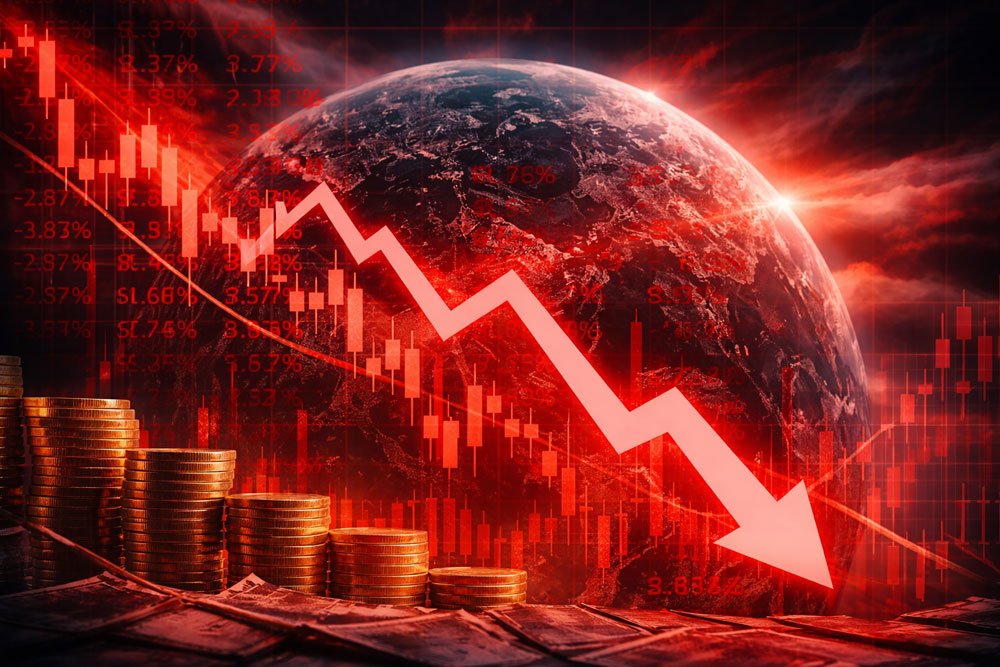
Global stock markets experienced a dramatic downturn today, sending shockwaves across the financial world and raising concerns among investors, analysts, and institutions alike. The sudden crash wiped out billions in market value within hours, marking one of the most volatile trading sessions in recent times.
From the opening bell, markets showed clear signs of weakness. Major indices plunged sharply as panic selling gripped investors. What initially appeared to be a mild correction quickly turned into a full-scale sell-off, affecting multiple sectors simultaneously. Technology, banking, energy, and even traditionally stable sectors were not spared.
A Day of Heavy Losses Across Markets
The scale of the crash became evident as trading progressed. Stocks that had been performing strongly in recent weeks suddenly reversed course, leading to widespread losses. Many blue-chip companies saw their shares fall significantly, while mid-cap and small-cap stocks experienced even steeper declines.
Market participants reported unusually high trading volumes, indicating that a large number of investors were exiting their positions. This surge in selling activity intensified the downward momentum, pushing markets deeper into negative territory.
The crash was not limited to equities alone. Other asset classes, including cryptocurrencies and commodities, also experienced volatility. This widespread impact highlights the interconnected nature of today’s global financial system.
What Triggered the Global Market Crash?
Several factors appear to have contributed to today’s market downturn. While no single event can fully explain the crash, a combination of economic and psychological elements played a key role.
1. Rising Inflation Concerns
Persistent inflation has been a major concern for investors. As prices continue to rise, the purchasing power of consumers weakens, which can negatively impact corporate earnings. Inflation also forces central banks to take stricter monetary measures, creating additional pressure on markets.
2. Interest Rate Uncertainty
The possibility of further interest rate hikes has created anxiety among investors. Higher interest rates increase borrowing costs for businesses and consumers, potentially slowing down economic growth. This has led many investors to reassess their risk exposure.
3. Weak Investor Sentiment
Market sentiment plays a crucial role in driving short-term movements. In recent days, growing uncertainty and negative news flow have weakened investor confidence. Once selling begins, fear often spreads quickly, resulting in a chain reaction.
4. Global Economic Slowdown Fears
Concerns about a potential economic slowdown have also weighed heavily on the markets. Slower growth expectations can lead to lower corporate profits, making stocks less attractive to investors.
Sector-Wise Impact of the Crash
The impact of the crash was felt across almost all sectors, though some were hit harder than others.
🔻 Technology Sector
Technology stocks faced one of the steepest declines. High-growth companies are particularly sensitive to interest rate changes, making them vulnerable during uncertain times.
🔻 Banking & Financials
Banking stocks also came under pressure due to concerns about reduced lending activity and economic slowdown.
🔻 Energy & Commodities
Energy stocks experienced volatility as commodity prices fluctuated, reflecting uncertainty in global demand.
🔻 Cryptocurrency Market
The crypto market mirrored the broader trend, with major digital assets witnessing sharp declines as investors moved towards safer options.
Expert Analysis: Is This a Correction or a Crash?
Market experts remain divided on whether the current situation is a temporary correction or the beginning of a deeper downturn.
Some analysts believe that the crash is a natural correction following a period of strong gains. According to them, markets often go through cycles, and such pullbacks are necessary to maintain balance.
Others, however, warn that the combination of inflation, interest rate hikes, and global uncertainty could lead to a prolonged period of volatility. They advise investors to remain cautious and closely monitor economic indicators.
Investor Reactions and Market Psychology
Investor behavior during market crashes is often driven by emotions. Fear and uncertainty can lead to impulsive decisions, such as panic selling, which can further accelerate the decline.
Today’s market movement reflected this psychological aspect clearly. As prices began to fall, more investors rushed to sell their holdings, creating a domino effect. Social media and financial news platforms also contributed to the rapid spread of fear.
However, experienced investors often view such situations as opportunities. Market downturns can provide attractive entry points for long-term investments.
What Should Investors Do Now?
During periods of high volatility, it is important for investors to stay calm and make informed decisions. Experts recommend the following strategies:
Avoid Panic Selling
Selling in a panic can lead to unnecessary losses. It is important to evaluate the situation carefully before making decisions.
Focus on Long-Term Goals
Short-term fluctuations should not distract investors from their long-term financial objectives.
Diversify Investments
A well-diversified portfolio can help reduce risk during market downturns.
Monitor Market Trends
Keeping track of economic indicators and market trends can help investors make better decisions.
What Lies Ahead for Global Markets?
The future direction of the markets will largely depend on upcoming economic data and policy decisions. Key factors to watch include:
- Inflation trends
- Interest rate announcements
- Corporate earnings reports
- Global economic developments
If these factors show positive signs, markets may stabilize and recover. However, continued uncertainty could lead to further fluctuations.
Conclusion
Today’s global stock market crash serves as a reminder of how quickly financial markets can change. While the sudden decline has created concern among investors, it also highlights the importance of preparedness and strategic planning.
Market volatility is an inherent part of investing, and those who remain patient and disciplined are more likely to navigate such challenges successfully.
For the latest updates and in-depth analysis, stay connected with NewsOrbit.